


Article: More Than Meets the Eye: The Story Behind a Better Mirror
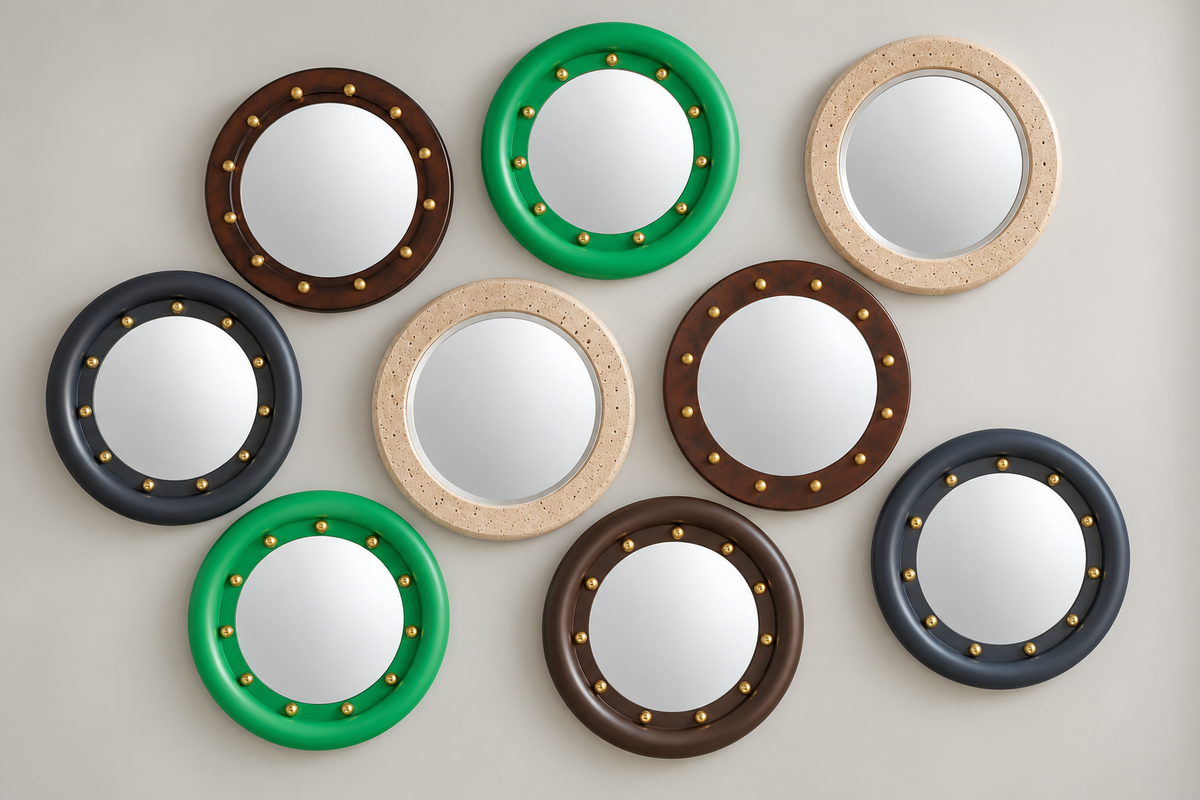
More Than Meets the Eye: The Story Behind a Better Mirror
Beautiful design gets your attention. Thoughtful craftsmanship makes it worth a second look. At CIANA | Varaluz, we believe you shouldn't have to choose between the two.
A mirror can do a lot for a room. It can open up a space, catch a little extra light, add dimension, and turn an otherwise forgotten wall into something worth noticing. Sometimes it's the finishing touch. Sometimes it's the entire conversation.
But there's more to a great mirror than what you see in the reflection.
We're drawn to things with a story. Designs with personality. Unexpected details. Pieces that make you stop for a second look. And while the frame might be what catches your eye first, what's behind it is what makes the difference over time.
A beautiful mirror should do more than look good on day one. It should deliver a clear, true reflection and maintain its beauty long after it finds its place on your wall.
And that's where the story gets interesting. Because when it comes to a well-crafted mirror, some of the most important details are the ones you never see.

True Beauty Is More Than Skin Deep
Here's where things get interesting.
While the frame gets most of the attention, the quality of the glass is one of the biggest factors in how a mirror actually performs. Color, clarity, thickness, and reflective coatings all contribute to the final result.
We use extra-clear, low-iron glass, which has a reduced iron content for a brighter, whiter appearance. Unlike standard glass that can carry a noticeable greenish tint, extra-clear glass delivers a cleaner reflection with minimal color distortion. It also requires a more refined manufacturing process and higher-quality materials to achieve that clarity.
It's a subtle difference, perhaps, but one that matters when you want the colors, finishes, and details in your room to look the way they were intended.
Because the only thing that should have a green tint in your bathroom is your houseplant.

A True Reflection Starts With the Right Thickness
Not all glass is created equal, and when it comes to mirrors, thicker isn't always better.
Mirror glass commonly comes in ⅛", 3/16", and ¼" thicknesses. Thinner glass may be lighter and less expensive, but it can also be more susceptible to flexing, warping, and distortion. Ever looked into a mirror and wondered why your reflection suddenly looks a little longer or wider? That's not necessarily a bad mirror day. It could be the glass.
On larger mirrors especially, a thinner pane can be more prone to following imperfections in the wall or developing subtle waves over time. And while going thicker might sound like the obvious solution, more isn't always better. Additional thickness means additional weight, cost, and installation considerations.
That's why we believe ¼" is the sweet spot. It provides an excellent balance of strength, stability, clarity, and durability without adding unnecessary weight. It's substantial enough to help maintain a true, consistent reflection while remaining practical for decorative mirror applications.
Because the only distortion we want is the kind created by an exceptionally flattering camera angle.

Magic Layers
A great reflection doesn't happen by accident. It takes a little engineering.
The glass is only part of the equation. What happens on the back of that glass is just as important.
The reflective coating is what transforms a sheet of glass into a mirror, and the quality and protection of those layers play a significant role in how well it holds up over time.
Less sophisticated coating processes may offer fewer protective layers or less consistent application. Over time, an inadequately protected reflective surface can begin to deteriorate, resulting in discoloration, dark spots, and premature antiquing around the edges.
Our mirrors feature a seven-layer coating process applied by robotic equipment, with laser inspection to help ensure precise thickness and consistent coverage. This carefully controlled process supports accurate color, dependable reflectivity, and a longer-lasting finish.
We love a little vintage character. We just prefer it to come from the design, not from a mirror that's prematurely showing its age.
The Details You Don't See Matter Most
Here's something worth considering: What's holding your mirror together can be just as important as what's holding your attention.
Not every mirror is built with the same level of structural support. Depending on the product, manufacturers may use lightweight backing boards, fiberboard, MDF, or more substantial wood construction. These materials aren't interchangeable, and the difference can become apparent over time.
A backing that flexes or lacks adequate support can compromise the stability of the glass. And when the glass doesn't maintain its flatness, the reflection can suffer, too.
We use reinforced wood or plywood backing to provide a more substantial foundation for the mirror. It's designed to support the glass, help maintain its stability and flatness, and provide additional protection during shipping and handling.
Then there's moisture. Even a beautifully constructed mirror can be vulnerable when moisture finds its way to the reflective coating. That's why we pay attention to the edges and contact points, too.
Insulating tape is applied around the frame and other contact points to help protect the reflective coating from exposure and abrasion. Silicone sealant around the edges provides an additional moisture barrier, helping protect against the conditions that can contribute to pitting, erosion, and deterioration.
These aren't the details that typically make it into a design mood board. But they're the details that make a difference long after installation.
Because good design shouldn't stop at the surface. The craftsmanship deserves just as much attention as the finished piece.
A Better Reflection. A Better Story.
A mirror is one of those pieces you live with every day. It catches the morning light, opens up a room, reflects the moments that happen around it, and becomes part of the backdrop of everyday life.
So why should its craftsmanship be an afterthought?
From the clarity of the glass to the strength of its backing, from the precision of its reflective coating to the protection built into every edge, every detail plays a part in how a mirror looks, performs, and lasts. These are the things you may never notice when you first see it. But over time, they're exactly what you'll appreciate.
Because a mirror should be more than a beautiful frame around a reflection. It should be a thoughtfully made piece of design, built to hold its beauty long after the first impression.
At the end of the day, what makes a mirror exceptional isn't just what it reflects. It's everything that goes into making that reflection worth looking at.



Leave a comment
This site is protected by hCaptcha and the hCaptcha Privacy Policy and Terms of Service apply.