


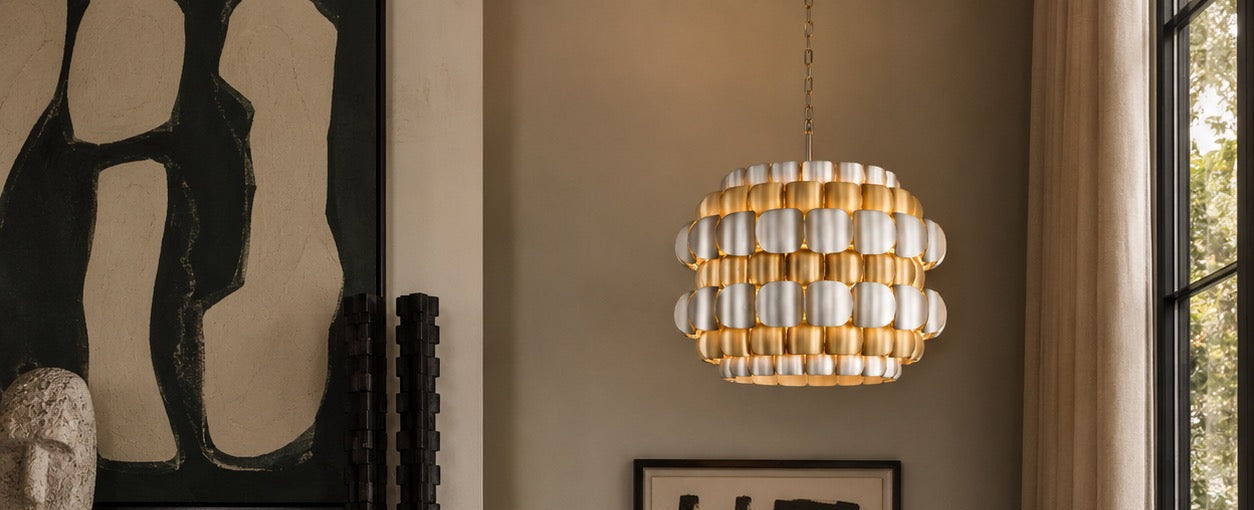
Pendants Have Left the Kitchen
WHY DESIGNERS ARE LETTING PENDANT LIGHTING WANDER
For years, pendant lighting had one primary assignment: hover above the kitchen island and do its job quietly.
That era is over.
Designers are now pulling pendants into unexpected places – beside beds, down long hallways, into reading corners, even into bathrooms that look more like boutique hotels than utility spaces.
And it makes sense. A pendant isn’t just illumination anymore. It’s form, scale, personality. Sometimes it behaves more like sculpture than fixture.
The result is lighting that doesn’t just support a space – it defines it.
Here are five places pendants are showing up beyond the kitchen, and why designers are leaning in.
1. HALLWAYS THAT DO MORE THAN CONNECT ROOMS
Hallways are usually treated as necessary background noise. You pass through them, not into them.
But lighting changes that instantly.
Instead of defaulting to rows of recessed cans, designers are using pendants to introduce rhythm and scale. A single oversized fixture—or a measured series—turns a corridor into something that feels intentional, almost gallery-like.
Long sightlines suddenly have punctuation. Movement becomes part of the experience.
Designer takeaway: If the ceiling height is there, use it. Hallways are one of the easiest places to create drama without clutter.

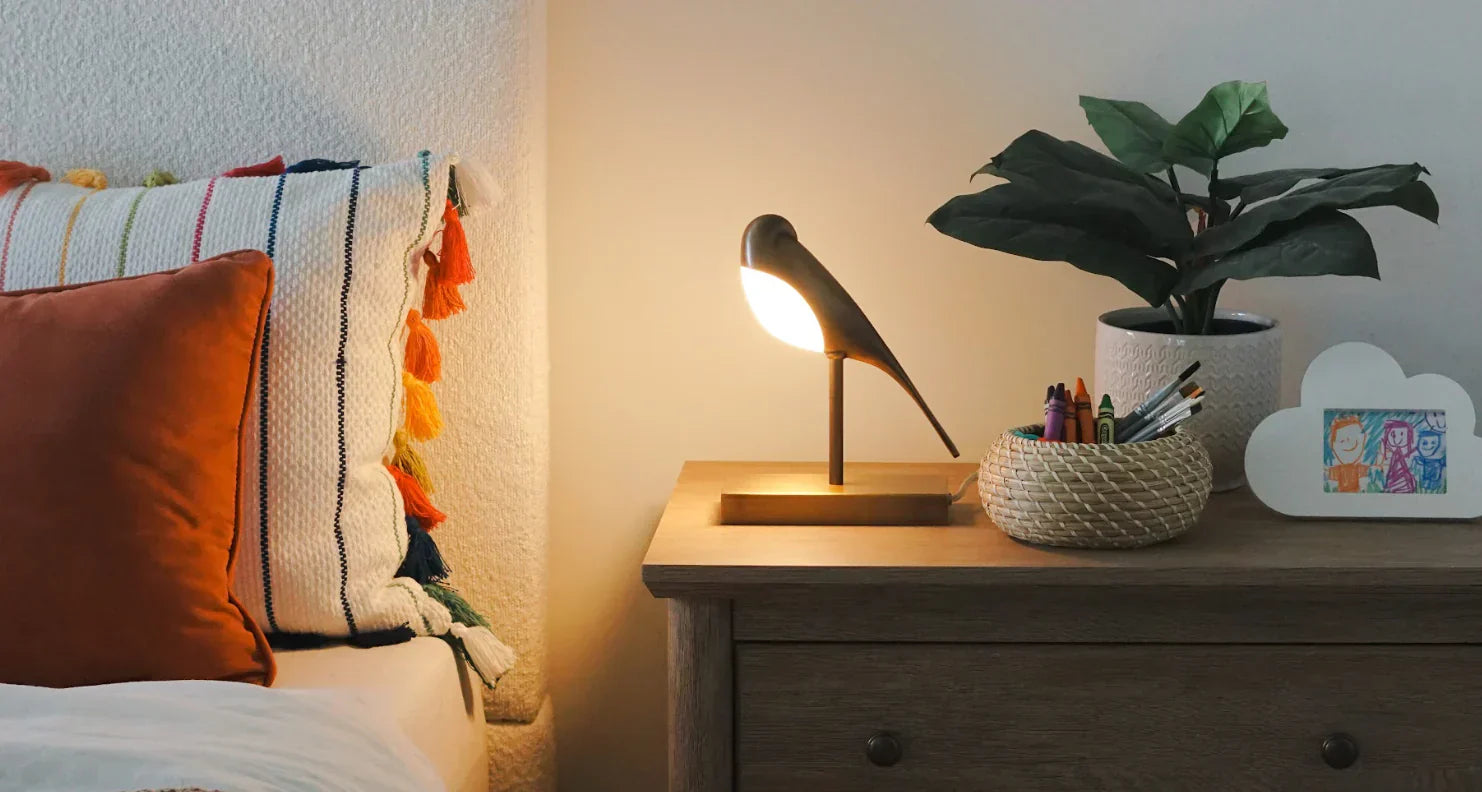
2. BEDSIDE LIGHTING GETS AN UPGRADE
Table lamps have had their moment.
But pendants quietly take their place with something more refined: space.
By lifting light off the nightstand, designers free up surface area while creating a cleaner, more architectural look. The bedside stops feeling like a cluster of objects and starts feeling composed.
Symmetry works beautifully here, but so does imbalance. A slightly offset pendant can feel more personal, more collected—like the room evolved over time instead of being installed in one pass.
And visually, it changes the scale of the bedroom. The eye travels upward, and suddenly the room feels taller, lighter, more considered.

3. HOME OFFICES THAT DON'T FEEL LIKE AN AFTERTHOUGHT
Remote work turned bedrooms into offices overnight. Lighting, unfortunately, didn’t always get the memo.
A pendant helps fix that. Not by being louder but by being more intentional.
Instead of default task lighting, designers are choosing fixtures that actually contribute to the identity of the room. Soft sculptural shapes, natural materials, unexpected silhouettes—pieces that feel human in a space full of screens and straight edges.
It’s a subtle shift, but an important one. The office stops feeling temporary and starts feeling designed.

4. BATHROOMS RE BECOMING SHOWROOMS
Bathrooms have slowly moved from utilitarian to expressive, and lighting is leading that change.
Pendants are now appearing beside mirrors, flanking vanities, and even hovering near freestanding tubs where they add softness and contrast to all the hard surfaces.
The effect is immediate. What used to feel functional now feels layered. Intentional. Almost cinematic.
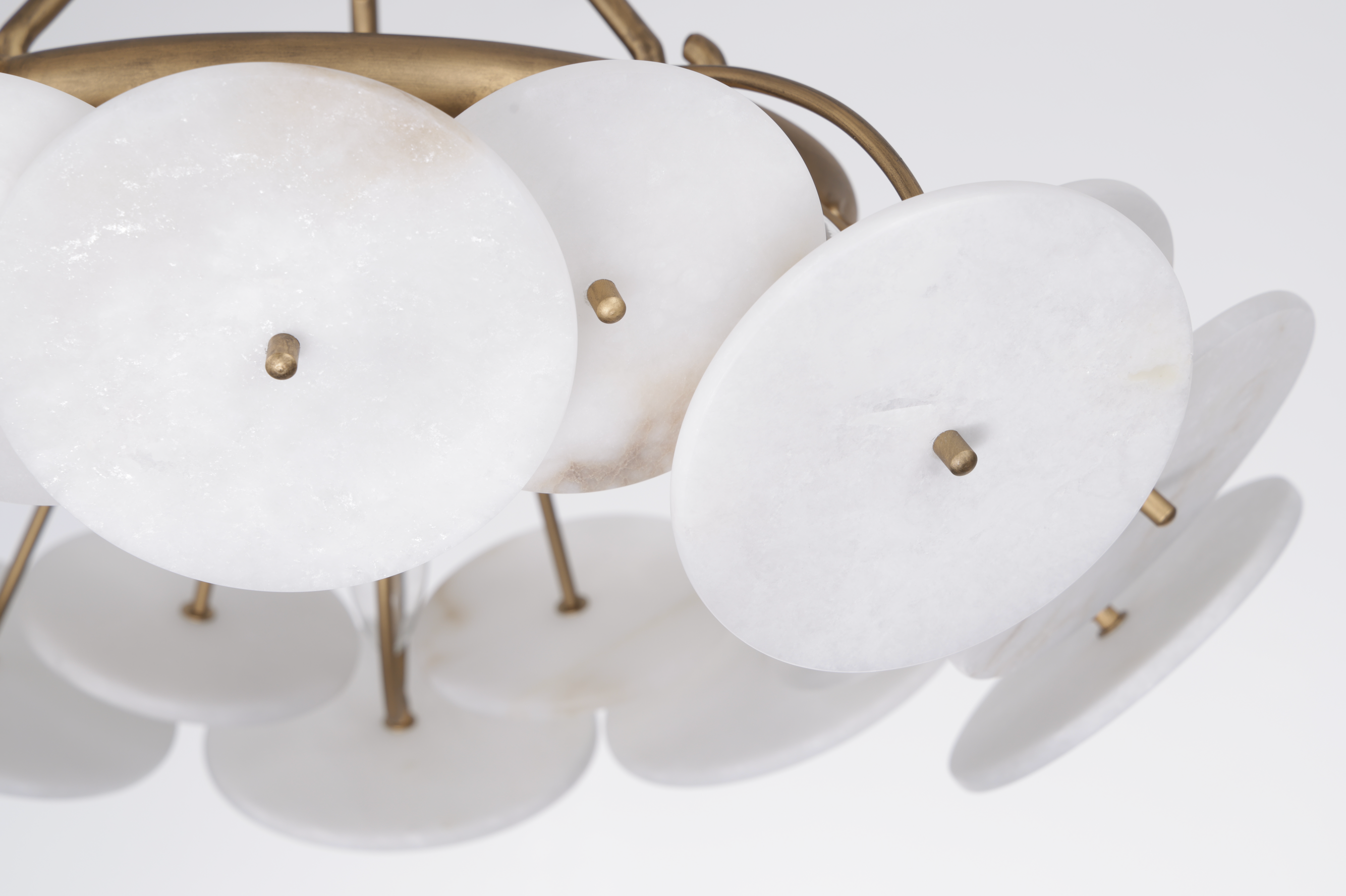
Glass, metal, woven materials, organic shapes—pendants bring texture into a room that often doesn’t have many opportunities for it.
5. READING NOOKS NEED THEIR OWN SPOTLIGHT
A reading corner without good lighting is just a chair in a corner but a pendant fixes that instantly.
By anchoring light overhead, the space becomes defined without needing walls or extra furniture. It feels carved out rather than added on.
More importantly, it changes behavior. A well-lit nook invites you to slow down. Sit longer. Stay longer than you planned.
It becomes its own small world inside the home.

WHEN PENDANTS BECOME INSTALLATIONS
Where you place a pendant matters.
How you use it matters even more.
One of the biggest shifts in lighting design right now is the move from single statement fixtures to curated groupings. Designers are layering pendants in varying sizes, colors, and hanging heights to create installations that feel more like art than lighting.
The approach works especially well in stairwells, entryways, and large open spaces where a single fixture can feel lost. Repeating a form while changing the scale creates movement, visual rhythm, and a sense of discovery.
The result isn't a room with a pendant.
It's a room shaped by one.

LOOKING BEYOND THE ISLAND
The kitchen island still matters. It always will.
But it's no longer the only place pendants get to live.
They're showing up in hallways, bedrooms, bathrooms, home offices, reading nooks, stairwells, and soaring entryways. Sometimes as a statement piece. Sometimes as an installation.
And we're here for it.
Because when pendants are thoughtfully placed, properly scaled, or grouped with intention, they do something every great design element should do:
They make people stop and look up.


Leave a comment
This site is protected by hCaptcha and the hCaptcha Privacy Policy and Terms of Service apply.